
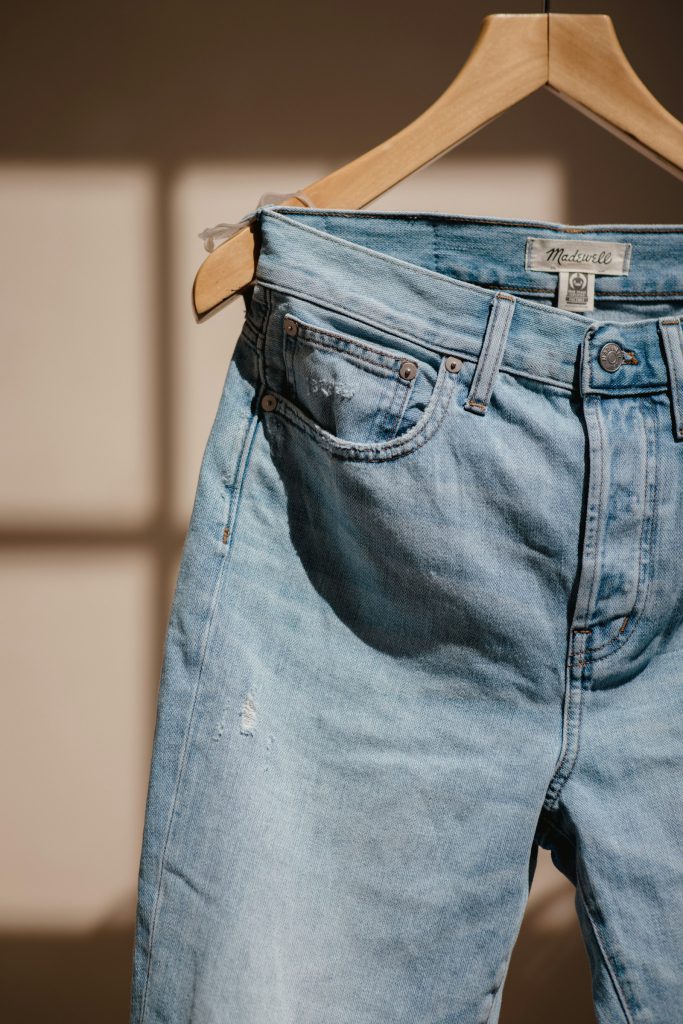

Jeans Waist Fits Perfectly, But the Length Is All Wrong?
You checked the waist size twice, ordered your usual number, and the parcel still arrived with jeans pooling at your ankles. You’re not imagining it — this is one of the most common complaints in online jeans shopping, and it has a very specific, very fixable cause.
Why Your Waist Fits But the Length Still Goes Wrong

Same waist number, five completely different finished lengths.
Here’s the part most shoppers never learn: waist size and leg length are almost always two separate, independent numbers on a pair of jeans, even though the size label only ever shows you one of them. A “32” waist jean can ship with a 30-inch inseam, a 32-inch inseam, or a 34-inch inseam depending on the brand, the cut, and sometimes even the specific wash or collection. When a listing only says “Size 32,” you’re being given half the information you need.
This is exactly why the waist can land perfectly while the hem drags on the floor or bunches up at your ankle. It isn’t a fluke, and it isn’t your body — it’s a structural gap in how most Indian and international fast-fashion sites present sizing. Western size charts are often built around inseam lengths that run longer than the median leg length for many Indian buyers, so a “standard” length on the site can translate to noticeably long on you, even though the waist band was calculated correctly.
The good news is that once you understand where this mismatch comes from, it’s almost entirely preventable — and even when it does happen, there are quick, affordable ways to fix a pair of jeans that are otherwise perfect.
Waist, Inseam & Rise: The Sizing Language Stores Don’t Explain

Every pair of jeans is really defined by three measurements working together, not one:
Waist is the number most product titles lead with — it’s the circumference around the waistband, usually in inches.
Inseam is the length from the crotch seam down to the hem, and it’s the number that actually determines whether the jeans end at your ankle, pool on the floor, or sit at a cropped length.
Rise is the distance from the crotch seam up to the top of the waistband, and it quietly shifts how long the leg appears even at the same inseam, since a high-rise pair sits differently on your hips than a low-rise one.
Most listings advertise waist prominently because it’s the number people search and filter by. Inseam is frequently buried lower on the page, sometimes only visible inside the size chart table rather than the main product description — which is exactly why so many buyers order on waist alone and get surprised by the length.
Regular, Long & Petite: Quiet Fit Codes That Change Everything


Many international and premium Indian labels quietly sell the same waist size in more than one length variant — usually labelled “Regular,” “Long,” “Petite,” or “Tall” somewhere in a dropdown or a size selector you might not notice on a mobile screen. If a size chart lists an inseam of 34 inches or more for a “Regular” fit, that’s built for someone considerably taller than the Indian average, and ordering it without checking will almost always land you with excess length.
Domestic Indian brands and marketplace private labels tend to run shorter, more proportionate inseams by default, which is one reason the same waist size can feel completely different in length depending on whether you’re buying from a homegrown label or an international one. Neither is “wrong” — they’re simply calibrated for different average body proportions, and the size label alone won’t tell you which one you’re getting.
Before adding to cart, search the product page for the word “inseam” using your browser’s find function (Ctrl+F or Cmd+F). If the number isn’t there at all, treat that as a red flag rather than an oversight — it usually means the listing hasn’t accounted for length variance.
The 3 Measurements to Take Before You Buy

Pull out a soft measuring tape and take these once — you’ll reuse the numbers for every future purchase.
Your inseam: Wear a well-fitted pair of jeans or trousers, measure from the crotch seam straight down to where you want the hem to end.
Your waist: Measure around your natural waistline where you’d actually wear the jeans, not your narrowest point.
Your outseam: Measure from your natural waist all the way down to your ankle bone — useful for high-rise styles where inseam alone can be misleading.
Write these three numbers down somewhere you’ll actually check — a notes app works well. Once you have them, comparing against any brand’s size chart takes seconds instead of guesswork, and it’s the single biggest habit change that prevents this exact problem from repeating.
Reading the Size Chart the Right Way

The size chart tab is usually where the real answer is hiding.
Almost every serious online store places a “Size Chart” or “Size Guide” link near the size selector, and it’s the one tab most shoppers skip because they already “know their size.” That chart is where the actual inseam-per-size table lives, and it’s the fastest way to catch a length mismatch before checkout rather than after the parcel arrives.
What to actually check in the chart
Look specifically for a row or column labelled inseam, front rise, or leg length — not just waist and hip. Compare that number directly against the inseam you measured for yourself. If the site only gives a size range like “S / M / L” with no numeric inseam at all, that’s a sign the brand’s fit is inconsistent, and reviews mentioning fit are worth reading before you commit.
For brands you’ve never bought from before, it’s worth spending the extra two minutes cross-checking the chart even if you’re confident in your usual number — your “usual number” was calibrated against a different brand’s proportions, not this one’s.
The Shopping Habits That Quietly Cause This

A few small habits are behind most length mismatches, and none of them are really about the buyer’s judgement — they’re about how listings are designed to be skimmed quickly.
Buying purely on a remembered size number from a different brand or a different year is the single biggest cause, since fits get revised across seasons.
Skipping the size chart tab because it feels like an extra step is a close second — it’s often collapsed or requires a click that mobile shoppers scroll straight past.
Trusting model photos as a length reference is another common trap, since models are frequently styled taller than average and the jeans may even be pinned or cuffed for the shoot.
None of these are careless mistakes — they’re simply how fast online browsing works. Slowing down for the one extra tab or search click is a small habit that removes almost all of the risk.
Checking the inseam number takes roughly the same few seconds as checking the price — it just isn’t the number most shoppers think to look for.
Jeans Already Too Long? Do This First

Before deciding on a fix, check the fabric and hem construction closely.
If the parcel has already arrived and the length is clearly too long, resist the urge to decide on a fix immediately. Try the jeans on with the shoes you’ll actually wear with them, since footwear changes the “correct” landing point of the hem by an inch or more. Stand normally rather than on tiptoe, and check both the front break and the back — jeans that look fine from the front can still be dragging under the heel.
Temporary options while you decide
A single cuff or double cuff at the ankle is the quickest non-permanent fix and works especially well with straight or relaxed cuts. It costs nothing, takes a few seconds, and buys you time to decide whether you want to keep the pair, alter it, or return it.
Once you’ve tried them on properly, you’ll generally know which of three paths makes sense: keep and hem, return for exchange, or return for refund. The next two sections walk through how to make that call and how each option actually plays out.
Getting Them Hemmed Properly

If the waist, hip, and thigh all fit well and only the length is off, hemming is usually the better move than returning — especially for a pair you already like.
A local tailor typically charges a modest amount for a plain hem, and most neighbourhood tailoring shops can turn a straightforward jeans hem around within a day or two.
Ask specifically for an “original hem” finish rather than a plain cut-and-stitch — a good tailor can reuse the factory hem’s stitching and fading pattern so the shortened jeans still look factory-finished, not obviously altered.
Bring the shoes you plan to wear with the jeans to the tailoring appointment, and ask the tailor to pin the length while you’re standing in them. This one step prevents the most common hemming mistake, which is cutting to a length that looks right lying flat on a table but sits differently once you’re actually wearing and moving in the jeans.
Never let more than about two inches be taken off in one go if you’re unsure — you can always shorten further next time, but you can’t add length back once it’s cut.
Return, Exchange, or Alter? How to Decide

Not every long-length jean is worth altering, and not every mismatch is worth the hassle of a return. A simple way to decide:
Exchange for a shorter size variant if the brand explicitly offers “Regular” and “Petite” or “Short” lengths in the same waist — you’ll get a proportionate fit for free.
Alter with a tailor if only the length is off and everything else — waist, hip, thigh, rise — fits the way you want.
Return for a full refund if the waist, hip, or thigh also don’t sit right, since hemming won’t fix a fit problem beyond length.
Most Indian marketplaces — including the major fashion platforms — give a return or exchange window of roughly seven to fifteen days from delivery, so it’s worth deciding within the first day or two rather than letting the window lapse while the jeans sit unworn in a drawer.
Your Jeans-Buying Checklist For Next Time

A well-fitted pair, waist and length both correct.
Save your own inseam, waist, and outseam numbers once, and run every future jeans purchase through this same short list:
- Open the size chart tab and look specifically for an inseam or leg-length number, not just waist
- Compare that inseam against your own measured inseam, not your remembered size from another brand
- Check for length variants like Regular, Long, Petite, or Short before selecting a size
- Read one or two reviews mentioning fit or length, especially for a brand you haven’t bought before
- Note the platform’s return window on the order page before you buy, as a safety net either way
Once this becomes routine, the same “waist fits, length doesn’t” surprise stops happening almost entirely — and on the rare occasion it still does, you now know exactly which of the three fixes to reach for.