
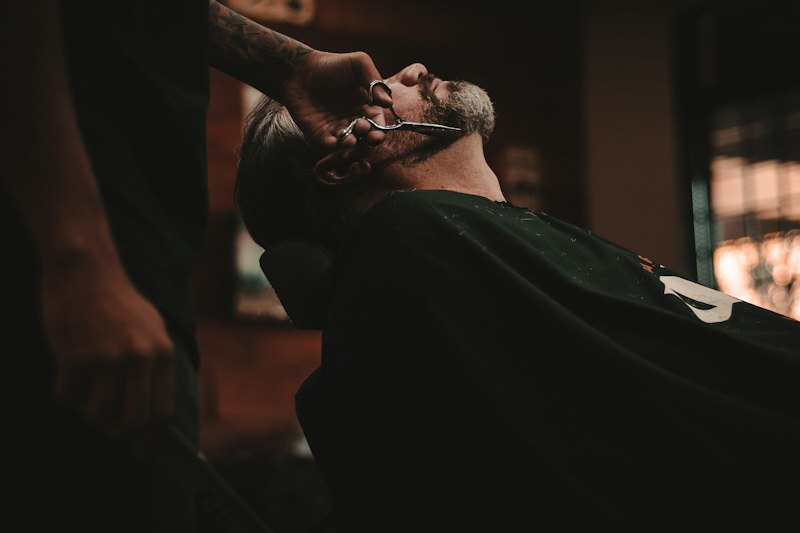
“The best hairstyles for men aren’t found on a mood board — they’re found at the intersection of your hair, your face, and your frame.”
Walk into ten different barbershops with the same reference photo and you will likely leave with ten different results. A hairstyle that looks sharp on one man can look completely wrong on another. This guide breaks down the best hairstyles for men through key variables: length, thickness, and face shape, providing you with a framework to know exactly what to ask for.
For a complete grooming routine, consider exploring our guide on Gentle Ways to Remove Tan Naturally to keep your skin as sharp as your haircut.
01 Hairstyles by Hair Length

Length is the most visible variable in any haircut, setting the ceiling for everything else. Here’s a breakdown based on the length you prefer.
Short Hair: Buzz Cut & French Crop
Short styles are the lowest-maintenance option and the most forgiving.
- Hair Texture Considerations: Ideal for thin or receding hair as the shortness creates the illusion of fullness. Also works great for highly textured, curly hair.
- Styling Time: Under 1 minute.
- Maintenance Needs: High frequency of barber visits (every 2-3 weeks) to keep the fade sharp.
- Barber Instructions: Ask for a mid-to-high skin fade on the sides and back, leaving a uniform length on top for a buzz cut, or a slightly textured, longer fringe for a French crop.
Medium Hair: Textured Quiff & Side Part
Medium length (two to four inches on top) offers the most styling flexibility.
- Hair Texture Considerations: Works best with medium to thick hair that has some natural wave or straightness to hold volume.
- Styling Time: 5-10 minutes (requires blow-drying and product application).
- Maintenance Needs: Medium frequency (every 3-4 weeks).
- Barber Instructions: Ask for a taper or low fade on the sides, keeping 2-3 inches of length on top with point-cutting for added texture and movement.
Long Hair: Layers & Slicked Back
Long hair requires commitment but rewards you with a distinctive look.
- Hair Texture Considerations: Best for thick, naturally straight or wavy hair. Avoid if your hair is very fine, as it will look sparse.
- Styling Time: 10-15 minutes (focus on conditioning and natural drying).
- Maintenance Needs: Low frequency of cuts (every 6-8 weeks), but high daily conditioning needs.
- Barber Instructions: Ask for a layered trim to remove weight and prevent a ‘helmet’ effect. The sides should blend smoothly into the top length.
02 Hairstyles by Hair Thickness

Thickness determines how a haircut holds its shape and how much texture will show. Getting this right prevents a haircut that “disappears” or puffs up uncontrollably.
Thin Hair
- Hair Texture Considerations: Fine strands lack body.
- Barber Instructions: Stick to shorter cuts like crew cuts and textured crops. Avoid long tops which emphasize thinness. Ask your barber to blunt-cut the top to maximize bulk.
- Styling Time: 2-3 minutes. Use a lightweight matte clay.
Thick Hair
- Hair Texture Considerations: Coarse strands carry natural volume but can become unmanageable if left bulky.
- Barber Instructions: Request a taper fade with a heavily texturized top. The barber should use thinning shears to remove excess bulk without losing the shape.
- Styling Time: 5 minutes. Use a strong-hold pomade or wax to control the volume.
03 Hairstyles by Face Shape

Your facial structure should dictate where your hair adds volume or creates angles.
Round Face
- Goal: Add length and create angles.
- Barber Instructions: Ask for tight sides (high fade) and volume on top (like a pompadour or quiff) to elongate the face. Avoid fringes that round the face further.
Square Face
- Goal: Soften the strong jawline or accentuate the masculine angles.
- Barber Instructions: A classic side part or a short crew cut works perfectly. Keep the sides short but leave enough length on top to create a slight, soft texture.
Oval Face
- Goal: Maintain the natural balance.
- Barber Instructions: Most styles work, but avoid forward fringes that hide the forehead. Ask for a swept-back style or a classic taper.
How to Speak to Your Barber: Exact Guard Numbers & Terms
Vague requests like “short on the sides, medium on top” produce wildly different cuts depending on who holds the clippers. Walk into your barbershop with clear technical vocabulary so your cut grows out cleanly between visits:
- Clipper Guard Numbers: A #1 guard leaves ~3 mm, a #2 leaves ~6 mm, and a #3 leaves ~9.5 mm. Asking for a “low taper fade blending from a #1.5 into scissor-over-comb length on top” gives crisp definition around the ears without exposing pale scalp lines unevenly.
- Taper vs. Skin Fade: A classic taper gradually trims only the sideburns and neckline, keeping maintenance relaxed over 3–4 weeks. A skin (zero) fade drops down to bare skin and requires crisp touch-ups every 10–14 days.
- Neckline Finish: Always match neckline shape to your frame—a tapered natural hairline grows out softly with zero harsh shelf, whereas a sharp squared/blocked neckline frames wider jaws crisply but needs weekly cleaning.
Adapting Cuts to Thick Indian Hair, Waves & Humidity
Naturally thick, coarse, and wavy hair holds tremendous volume on day one—and poofs awkwardly on sides within two weeks if cut purely flat on top. Ask your stylist to apply light internal point-cutting or subtle weight removal through the crown rather than thinning shears from the roots (which makes short frizzy stubble pop upward through humidity). Pair matte styling clay on dry towel-blotted hair for flexible hold instead of wet gels that clump in coastal or monsoon air.
Related Grooming Guides: Build healthy scalp habits with our Simple Hair Care Routine for Men and match facial hair framing in Best Moustache Styles for Men.