Independence Day Outfit Ideas 2026: Tricolour Style & Every Indian State
What you wear on 15 August is a small, personal way of saying you belong to this country. Here’s how to do it with kurta-pyjama, sherwani, juti, sarees — and a tour of what every Indian state wears with pride.
The Tricolour Code: Wearing Saffron, White & Green Right

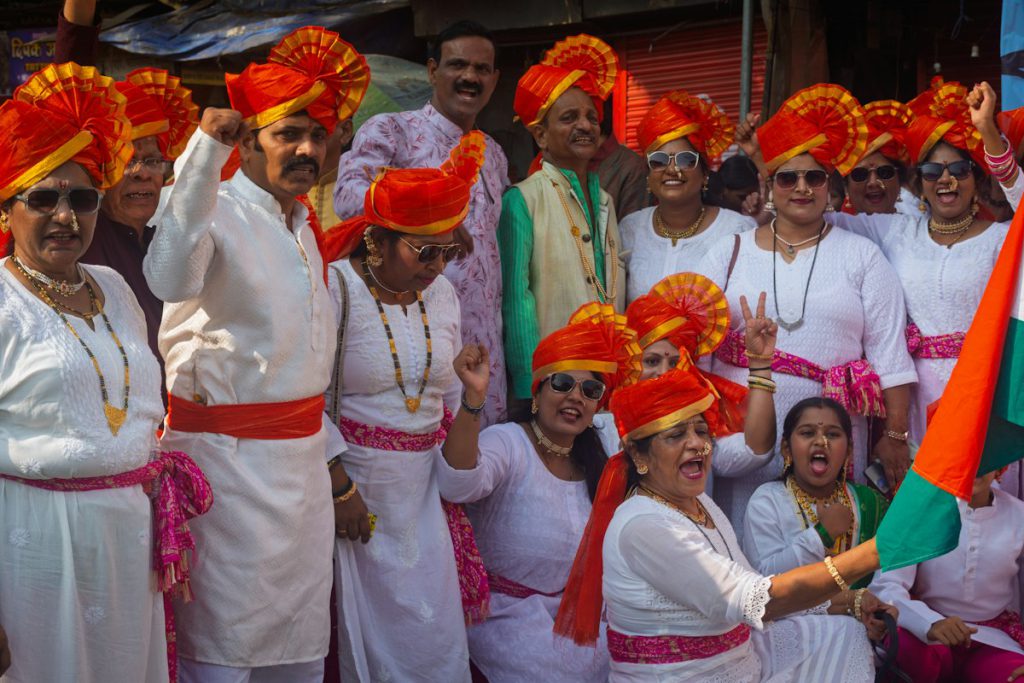
Orange turbans against white kurtas — the tricolour worn without trying too hard.
Every year, the same question comes back around the second week of August: what counts as an appropriate Independence Day outfit that isn’t a costume? The honest answer is that independence day outfit ideas work best when they borrow from the flag rather than replicate it. Head-to-toe saffron-white-green tends to look like a school fancy-dress entry, while one confident colour with two smaller accents reads as intentional and stylish.
The easiest formula, and the one stylists keep returning to: pick one dominant shade from the tricolour for your kurta, saree, or dress, then let a neutral — ivory, off-white, or natural cotton — do the heavy lifting as the base. A saffron kurta over white pyjama. A white saree with a green blouse. A green dupatta over a plain cream kurta set. Each element gets to breathe instead of competing for attention.
Fabric matters just as much as colour. Mid-August in most of India means heat, humidity, and a full day that moves between a flag-hoisting ceremony, a school or office event, and a family lunch. Cotton, mulmul, and chanderi handle that stretch far better than silk or velvet. If your event runs into the evening, a light jacket or dupatta over the same daytime outfit is usually enough of a shift — no need for a full second outfit.
If you’re unsure how much tricolour is too much, aim for the “one anchor, one accent” rule — one dominant flag colour in the main garment, and a second flag colour only in a border, dupatta, or accessory. Skip the third colour altogether if in doubt.
Kurta-Pyjama: The Effortless Independence Day Staple

If there’s one piece of clothing that solves the entire “what to wear on 15 August” question for men, it’s the kurta-pyjama. It works at a flag-hoisting at 8 AM, a school function by 10, and a family lunch that somehow turns into a photo session by evening — the same outfit carries all three without ever looking underdressed or overdressed.
A plain white or off-white cotton kurta paired with straight-cut pyjama is the safest, most versatile choice, and it’s exactly why it keeps showing up at the top of every independence day dress ideas list. For something with a bit more presence, a saffron or sage-green kurta with white pyjama nods to the tricolour without turning into a costume.
Where the kurta-pyjama earns its place is in the details. A round-neck or band-collar kurta in raw silk-cotton blend, finished with simple thread-work or a subtle Nehru collar, feels festive without needing embroidery. Roll the sleeves once, add a stole in the third flag colour, and the look is done — no styling degree required. This is also the one Independence Day outfit that survives being worn again the next week for a wedding function or festive dinner, which makes it a genuinely practical addition to a wardrobe rather than a one-day costume.
What to pair it with
Keep footwear flat and traditional — juti, mojari, or simple leather sandals. Skip sneakers with a kurta if the occasion is even slightly formal; it undercuts the whole look. A simple pocket square-style stole or a single strand of rudraksha or wooden beads finishes it without adding weight in the August heat.
Sherwani: When the Day Calls for More Formality

A sherwani is not the default choice for 15 August — it’s the choice when the day includes something bigger than a school assembly: an evening reception, a formal club event, a cultural performance, or a family function that leans dressy. Structurally, it’s a kurta taken up a notch — longer, more tailored through the chest, closed with buttons or hooks down the front, and almost always worn over churidar rather than loose pyjama.
For an Independence Day sherwani, restraint works better than maximalism. A single flag colour — ivory with gold thread-work, or a deep saffron with tone-on-tone embroidery — reads far more elegant than a sherwani that tries to literally recreate the flag across the chest.
Pair it with a simple Nehru jacket underneath instead of a heavily embroidered waistcoat if the event runs during the day, and save the more ornate stole or brooch for evening functions. A pocket square in the second flag colour, tucked rather than fanned out, is usually all the tricolour reference a sherwani needs. Footwear should stay traditional here too — mojari with a slight curl at the toe complements the formality far better than Western dress shoes.
Juti & Mojari: The Footwear That Finishes the Look

Most independence day outfit ideas fall apart at exactly this stage — the footwear. A carefully chosen kurta or saree paired with the wrong shoes undoes the whole effort, and given how much standing, walking, and photo-posing 15 August actually involves, comfort matters as much as looks.
Juti and mojari — the flat, closed leather or fabric shoes traditionally handcrafted in cities like Agra and Jodhpur — solve both problems at once. They’re built for a full day on your feet, and the embroidered, mirror-worked, or gold-thread versions add exactly the festive detail a plain kurta or saree needs.
For men, a cream or white juti with gold zari edging works with almost any kurta colour, while a saffron or maroon mojari can double as the outfit’s tricolour accent. For women, embellished mojaris in gold, ivory, or soft pastel now come in flat and slightly heeled versions, both far more practical with a saree or Anarkali than stilettos on grass or gravel. Break new juti in a day or two before the event — the leather softens quickly, but stiff new pairs are not something you want to discover for the first time during a two-hour flag-hoisting ceremony.
What Women Can Wear: Sarees, Co-ords & Kurta Sets


Independence Day dress ideas for women have moved well past head-to-toe tricolour in recent seasons, and that’s a genuinely good shift. A white saree with a saffron or green blouse and a matching border is still the most timeless option — it photographs beautifully, works at both a morning flag-hoisting and an evening dinner, and needs almost no additional styling beyond a bindi and simple jewellery.
For those who find six yards impractical on a busy day, a straight-cut kurta with cigarette pants or a fitted co-ord set is the modern equivalent — clean, structured, and easy to move in through a day that involves standing for the national anthem and sitting through a school programme in the same three hours. Anarkalis remain the go-to for anyone who wants a traditional silhouette without the saree’s draping effort, and A-line kurtas flatter nearly every body type, which is exactly why they show up on independence day outfit ideas lists year after year.
Younger crowds and college students increasingly lean towards fusion co-ord sets in tricolour tones that don’t read as costume-y — a saffron crop top with white palazzos, or a green kurta dress with minimal embroidery. Whatever the silhouette, the same rule from earlier holds: one dominant shade, one accent, and let cotton or chanderi do the work of staying comfortable through a long, warm day.
White does double duty on 15 August — it’s the coolest option in August heat and works for every event on the day’s schedule, from the flag-hoisting to the evening dinner, without needing a second outfit.
A Style Tour of India: Traditional Dress From Every State
Beyond the tricolour, Independence Day is also a good reason to look at what India actually wears — because “Indian traditional dress” was never one outfit. It’s dozens of them, shaped by climate, craft, and centuries of local weaving traditions. Here’s a state-by-state look at what’s traditionally worn across the country, useful whether you’re planning a cultural-day costume, choosing a regional saree, or just curious about the country’s sheer sartorial range.
Kurta-Pyjama & Phulkari
Men wear kurta-pyjama with a turban and Punjabi jutti; women wear salwar kameez with a phulkari dupatta, known for its dense floral embroidery.
Pagri, Dhoti & Ghagra Choli
Men tie a colourful pagri (safa) over dhoti-kurta with mojari; women wear mirror-worked ghagra choli with an odhni draped over the head.
Chikankari Kurta & Saree
Lucknow’s chikankari — fine white-thread embroidery on cotton or muslin — defines both men’s kurtas and women’s suits and sarees here.
Pheran & Pashmina
A long, loose woollen robe called the pheran is worn by both men and women, often paired with an embroidered pashmina shawl.
Himachali Topi & Suthan
Men wear the distinctive green Himachali cap with a wool kurta-suthan; women pair a woollen dress with a matching cap and silver jewellery.
Kediyu & Chaniya Choli
Men wear the angled, flared kediyu jacket over dhoti with a pagh; women wear the vibrant, mirror-worked chaniya choli seen at Navratri.
Pheta & Nauvari Saree
Men drape a dhotar with a pheta turban; women traditionally wear the nauvari, a nine-yard saree draped and tucked like trousers for ease of movement.
Dhoti-Panjabi & Tant Saree
Men wear a white dhoti with a panjabi (kurta); women wear the red-bordered white tant or garad saree, especially for festive occasions.
Dhoti-Kurta & Sambalpuri Saree
The Sambalpuri saree, woven in the distinctive ikat technique, is Odisha’s signature textile export and everyday festive wear.
Dhoti-Kurta & Madhubani Prints
Alongside classic dhoti-kurta for men, sarees printed with Madhubani folk art motifs have become a distinct regional style for women.
Veshti & Kanjeevaram Silk
Men wear a veshti (dhoti) with an angavastram over the shoulder; women wear the richly zari-bordered Kanjeevaram silk saree.
Mundu & Kasavu Saree
Off-white mundu for men and the cream-and-gold kasavu saree for women are worn especially during Onam and other festive days.
Panche, Peta & Ilkal Saree
Men wear a panche (dhoti) with a peta turban; women wear the Mysore silk or Ilkal saree, known for its distinctive red-and-white pallu.
Pancha Kurta & Pochampally
Men wear a pancha with a kurta; the Pochampally and Gadwal ikat sarees are the region’s best-known handloom textiles for women.
Gamosa & Mekhela Chador
Men drape a dhoti with the woven gamosa scarf; women wear the two-piece mekhela chador, often in golden muga silk.
Phanek & Innaphi
Women wear the phanek, a handwoven wraparound skirt, paired with the innaphi shawl, both distinguished by fine striped or checked weaves.
Bakhu
The Denzong Bakhu, a loose full-sleeved gown tied at the neck and waist, is worn by both men and women across the state.
Tribal Shawls
Each Naga tribe has its own hand-woven shawl with distinct motifs and colours, traditionally indicating the wearer’s clan and status.
Dressing Kids for Flag Hoisting & School Functions
Children’s Independence Day outfits need to survive a very different day than adults’ — standing in the sun for the anthem, sitting through a school programme, and usually a dance or fancy-dress segment somewhere in between. Comfort has to come before the look, or the outfit stops working by 10 AM.
A simple white kurta set with a tricolour stole is the easiest option for boys, easy to move in and just as easy to remove for a costume change if the school has a fancy-dress slot later. For girls, a lightweight cotton kurta-set or a simple tricolour frock works better than a heavily embellished lehenga, which tends to be too warm and restrictive for a full school day. For performance or dance segments specifically, a lighter lehenga-choli in saffron, white, and green is fine — just skip the heavy embroidery and oversized jewellery that can be uncomfortable for a full day of movement.
If your child is dressing as a freedom fighter or historical figure for a fancy-dress competition, keep the concept simple and let the accessories do the storytelling — round spectacles and a walking stick for Gandhi, a military-style cap for Bose — rather than an elaborate, restrictive costume.
Tricolour Accessories: The Details That Tie It Together

Bangles in saffron, white, and green add the tricolour touch without a full costume change.
Accessories are the lowest-effort, highest-impact way to bring the tricolour into any outfit without redesigning it entirely. A set of bangles in saffron, white, and green works over almost any sleeve length, and a small enamel or metal Ashoka Chakra brooch pinned to a kurta collar or dupatta does more visual work than an entire printed outfit.
For men, a simple stole draped over one shoulder in the third flag colour is often the only accessory needed. For women, a tricolour dupatta, a set of jhumkas in gold with a coloured stone, or even just a bindi in the day’s spirit finishes the look without adding weight in the heat. Badges, small flag pins, and printed pocket squares are easy last-minute additions if the rest of the outfit is already sorted and just needs a patriotic nod.
What to Wear, By Occasion
The same 15 August covers very different settings — a formal flag-hoisting, a relaxed family gathering, a school or office event. Here’s a quick reference for matching the outfit to the actual plan for the day.
- Flag HoistingStructured and modest — a plain white or single-colour kurta set, or a simple saree with a fitted blouse. Comfortable footwear, since you’ll be standing.
- Office EventA polished kurta or A-line dress in a patriotic shade stays professional while still nodding to the day — avoid anything too casual or too flashy.
- School FunctionComfort first — cotton kurta sets or simple frocks that can handle sitting, standing, and a possible dance or fancy-dress segment.
- Family GatheringMore relaxed — a printed co-ord set, Anarkali, or a lightly embellished kurta works well and photographs nicely for the inevitable terrace photo session.
- Evening Get-TogetherA little more shine is appropriate — sherwani for men, or a silk saree or embellished Anarkali for women.
Care Tips to Keep Ethnic Wear Looking Its Best
Cotton kurtas and sarees are the most practical choice for August, but they do need a little care to stay crisp through a long, humid day. Iron on the reverse side for embroidered pieces to protect the thread-work, and store juti and mojari with a light stuffing of tissue paper so the toe doesn’t lose its shape between wears.
For chikankari, bandhani, or mirror-worked pieces, a gentle hand wash in cold water — or a trip to a trusted local dry cleaner — keeps the embroidery intact far longer than a machine cycle. If the outfit is meant to be worn again for an upcoming wedding season or festival, hang it rather than folding it, to avoid permanent crease lines along the embroidery.
Whatever you choose this Independence Day — a plain white kurta, a saree in your favourite shade, or a full sherwani — the point was never to match the flag exactly. It’s to wear something that feels like you, on a day that’s about belonging to something larger than yourself.